If you are looking for an Undertale Fight difficulty tier list, use it as a decision tool rather than a fixed ranking: clear ordinary encounters first, learn the current stage, then spend attempts on a boss when your route and combat plan are ready. The available evidence does not provide numeric level thresholds, a complete stage order, or a verified randomizer, so this guide ranks progression situations by the preparation they require instead of inventing character or boss tiers.
Progression difficulty tiers
| Tier | Progression situation | What to do | Evidence boundary |
|---|---|---|---|
| Practice | Ordinary enemies in the current stage | Use encounters to rehearse your Combat choices before a major attempt. | Enemy rewards and exact difficulty are not documented. |
| Route check | Moving through the stage toward the next objective | Learn the route and identify whether reaching the top or another area is the immediate blocker. | The stage names, full route, and order are not confirmed. |
| Access gate | A locked door or room | Look for the relevant key before treating the route as a combat problem. | Key names, locations, door relationships, and room rewards are unknown. |
| Boss attempt | A boss encounter | Commit only after choosing a repeatable approach; if it fails, change one part of the plan and retry. | No complete boss order, level requirement, checkpoint, or reward table is verified. |
| High-risk attempt | A boss fought at a low level or with an untested method | Treat the run as practice and expect to reassess rather than assuming the level is sufficient. | The evidence mentions low-level attempts but gives no level number or formula. |
This is a qualitative undertale fight tier list for progression choices. It is not a claim that every enemy or boss has been ranked, and it should not be read as a verified “easy-to-hard” list of named encounters.
How to practice before a boss
- Clear nearby ordinary enemies first. Use the current stage as your practice space. This keeps training tied to the route you are actually trying to progress instead of assuming that a separate practice mode exists.
- Identify the failure point. Decide whether you are losing to combat, getting stopped by a locked door or room, or failing to reach the upper part of the stage. These require different next actions.
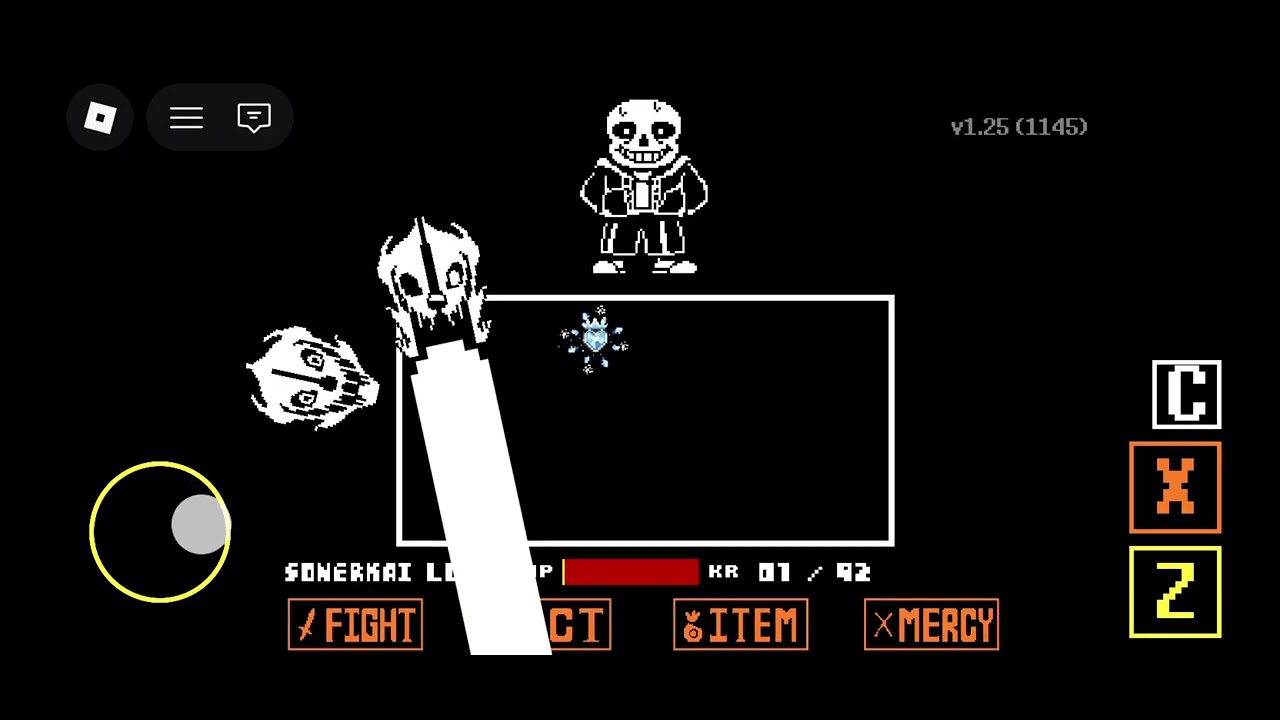
- Choose one boss approach. One recorded approach describes killing all of a boss’s units; treat that as a reported tactic for the relevant encounter, not a universal rule for every boss.
- Retry with one controlled change. After a failed attempt, adjust the combat method, route, or preparation rather than changing everything at once. Repeated boss attempts are documented player behavior, but a specific reset or respawn system is not confirmed.
Review a boss approach for progression attempts
This moment supports the boss-planning section by showing a simple approach that requires killing all of the boss's units.
Levels, stages, and access
Levels are useful as a readiness signal, but the evidence does not establish how to gain levels, what attributes they change, or which content they unlock. Do not use the RANK field shown on the Merg wiki page as a global progression level: the supplied evidence does not prove that the character-page field is the same system.
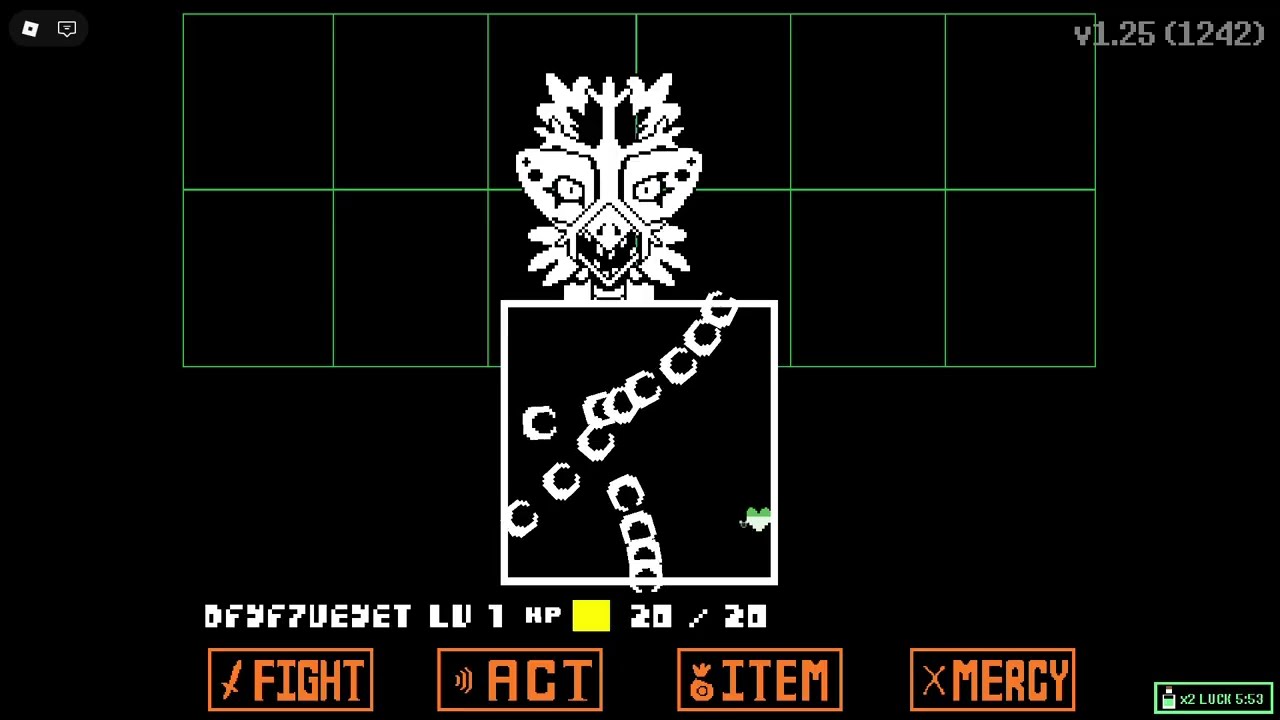
Stages connect ordinary encounters with later objectives and boss areas. Reaching the top of a stage is specifically described as difficult in the supplied video evidence, but the map structure and stage names are not complete enough to publish a route or stage-by-stage tier list.
Handle the difficult route to the stage top
This moment supports the stage-planning section by discussing the difficulty of reaching the top of the stage.
Keys are a separate troubleshooting path. If progress stops at a door or room, search for the corresponding key before assuming that you need a higher level. The keys and rooms guide lays out that access loop. The evidence mentions pursuing a door key and a room key, but it does not establish whether they are separate item types, where they spawn, or what rewards wait beyond them.
Undertale Fight tips for failed attempts
- If ordinary encounters are the problem: stay in the current stage and use them as combat practice before returning to the boss.
- If the boss is the problem: review whether the encounter contains multiple units; one reported tactic succeeds by eliminating all of a boss’s units, but it is not confirmed as a universal strategy.
- If the route is the problem: check for a key or an inaccessible room before repeating the same fight.
- If the level is the problem: record that the attempt is low-level and treat the result as evidence about readiness, not proof of a precise threshold.
- If a randomizer is mentioned: do not rely on undocumented randomizer behavior. No supplied source confirms its existence, configuration, or effect on the progression route.
What is not confirmed
The supplied progression evidence does not confirm an experience formula, level cap, level rewards, fixed stage sequence, permanent unlock system, stage rewards, boss rewards, checkpoint behavior, or randomizer rules. It also does not support a complete ranking of named enemies, bosses, or characters. Those details should be added only after a current in-game panel or a stronger source documents them.